Rental car classes explained: economy to luxury
How rental companies actually group their fleets — economy, compact, intermediate, full-size, three sizes of SUV, minivan, electric and luxury — and how to pick the right one for your bags and your group.
The ROAM airport deskOctober 5, 20266 min read
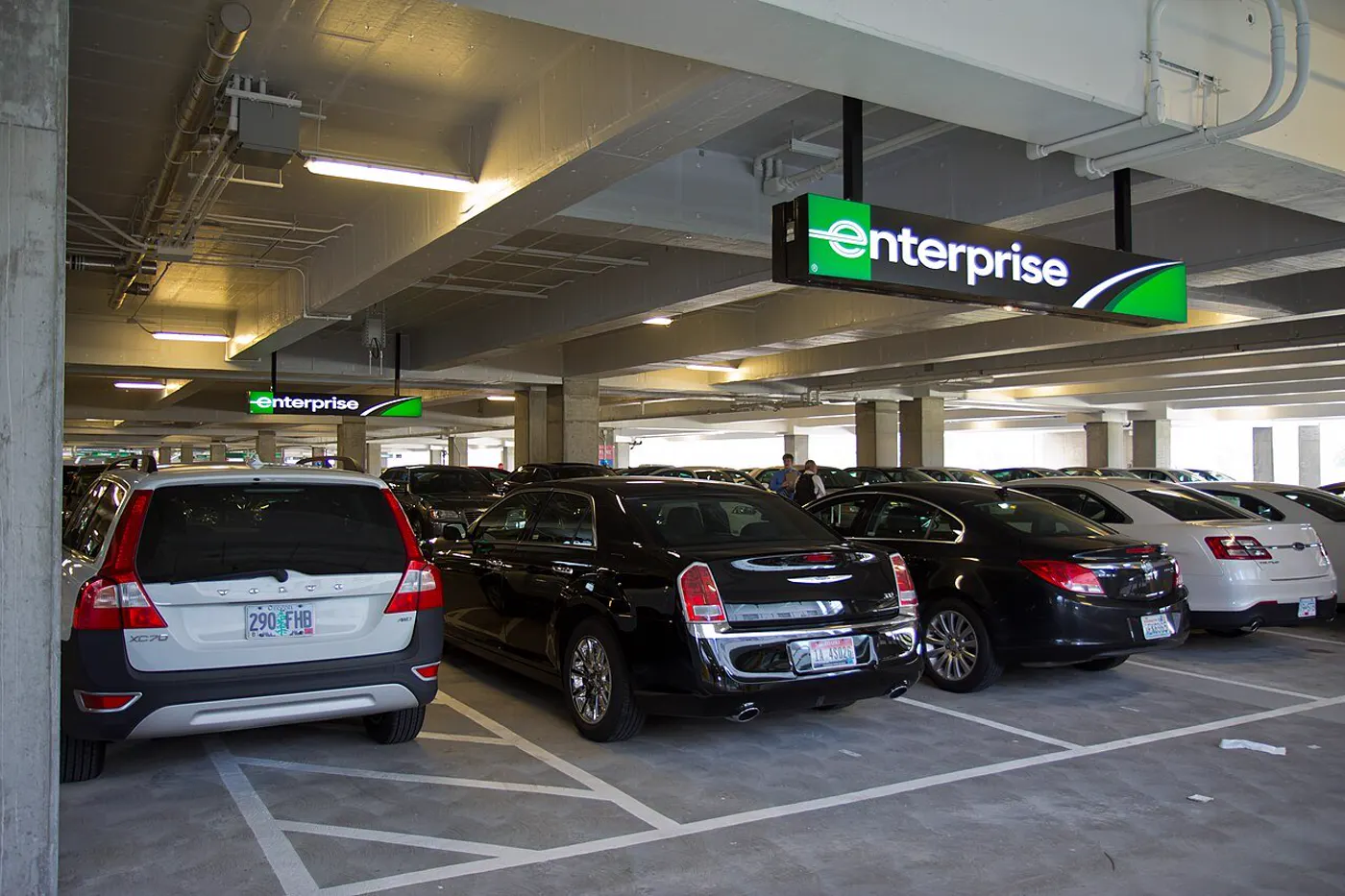
Photo: Atomic Taco · CC BY-SA 2.0 · resized and converted to WebP
Rental car classes explained, minus the alphabet soup: a class describes a type of car, not necessarily the exact model you’ll drive. “Toyota Camry or similar” means the Camry is an example. Your supplier’s offer tells you what category and capacity you’re actually booking. Most big rental companies — Enterprise, Hertz, Avis and the rest — group their fleets into roughly the same ladder of classes, so once you learn it, you can compare any company.
Economy and compact are the small-car tiers. Economy (Mitsubishi Mirage or similar) suits a light-packing solo trip or a couple with carry-ons. Compact (Nissan Versa or similar) is a small sedan with five seats and room for about two bags. Don’t assume “economy” always means the lowest price — compare the actual offers.
Here’s the gotcha that trips up almost everyone: the cars most people call “compact” — Toyota Corolla, Honda Civic, Hyundai Elantra, Kia K4 — are booked as Intermediate (also called Midsize). And the Toyota Camry, Honda Accord and Nissan Altima that people call “midsize” are actually Full-size in rental-speak. So if you want a Camry-type car, look at Full-size; if a Corolla works, Intermediate is your class.
SUV isn’t one size — it’s three. Compact SUVs (Chevy Trax, Nissan Kicks, Honda HR-V) are hatchback-sized with a higher seat. Midsize SUVs (Toyota RAV4, Honda CR-V, Nissan Rogue) are the most-booked airport SUVs, fitting a small family and three to four bags. Standard SUVs (Chevy Blazer, Ford Edge, Jeep Grand Cherokee) step up to roughly four large suitcases. Above that, full-size SUVs (Chevy Tahoe, Ford Expedition, GMC Yukon) seat seven or eight and swallow five or more bags. Don’t assume any SUV includes all-wheel drive or permission to drive off-road — check the offer.
For groups, a minivan (Chrysler Pacifica, Toyota Sienna, Kia Carnival) is the easiest hauler going: sliding doors, seven or eight seats, and huge cargo space — just check how much room remains behind the seats you’ll actually use. Considering an electric rental (Tesla Model 3, Hyundai Ioniq 5)? Work out charging stops and the return-charge policy first. Luxury and premium classes (Cadillac Escalade, BMW 3 Series, Lexus ES) are about the experience — but ask about the deposit, which is often higher.
Here’s the easy starting point: count people, count bags, then think about your longest drive. Compare the listed capacity and full offer terms, keeping in mind that bag-size icons are only a guide. Once you have the keys, use My Car to get familiar with the model you actually received.
Keep reading